
What if changes in your libido, arousal, or sexual response didn’t mean something was wrong with you?
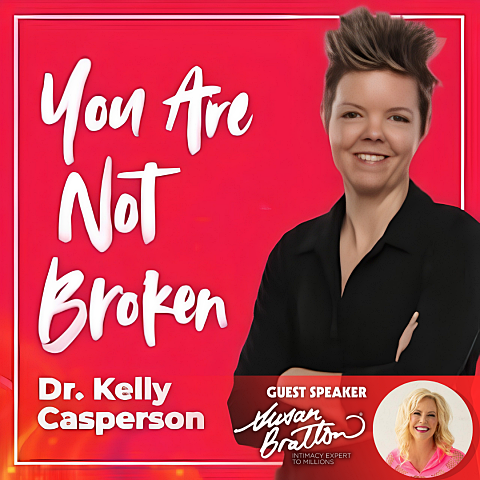
I recently joined Dr. Kelly Casperson on the You Are Not Broken podcast for a refreshingly honest conversation about sex, hormones, pleasure, and intimacy in midlife.
Kelly’s show rewrites much of what women have been taught about their bodies and sexuality. With science, humor, and zero judgment, she helps women—and the people who love them—understand the changes that can happen during perimenopause and beyond. Her central message is one I deeply appreciate: You are not broken.
Why Desire Can Feel Different in Midlife
Many women become disconnected from their desire and assume they have simply “lost” it. But desire is influenced by many interconnected factors, including hormones, blood flow, stress, emotional safety, relationship dynamics, body confidence, and the kind of stimulation you receive.
Desire doesn’t always appear spontaneously. Sometimes it emerges after affection, touch, relaxation, or arousal has already begun. Understanding this can take away so much pressure.
Your body may be changing, but that doesn’t mean your capacity for pleasure has disappeared. You may simply need a new approach that honors the body you have today.
The Science of Libido and Arousal
During our conversation, Kelly and I explored how hormonal changes in midlife can affect sexual response. Shifts in estrogen, testosterone, and other hormones may influence genital sensation, tissue health, lubrication, energy, and desire.
That is why sexual wellness deserves to be treated as an important part of whole-body health—not as an embarrassing concern women are expected to tolerate in silence.
When you understand what is happening physically and emotionally, you can begin exploring supportive options with qualified healthcare providers. More importantly, you can stop blaming yourself.
Asking for What You Really Want
We also talked about one of the most powerful intimacy skills anyone can develop: honest communication.
Your partner cannot read your mind. They may not know what kind of touch feels good, what has changed in your body, or what helps you feel emotionally open and receptive.
Talking about intimacy can feel vulnerable, especially if you were never given healthy language for pleasure. Start with curiosity instead of criticism. Share what you enjoy, offer loving feedback, and treat the conversation as something you are discovering together.
Communication isn’t separate from great intimacy. It is part of the intimacy.
Creating Deeper Pleasure and Connection
Pleasure-filled intimacy is not about rushing toward a goal or performing perfectly. It is about slowing down, paying attention, and allowing the body enough time to become fully aroused.
In this episode, I shared practical techniques for creating more sensation, emotional connection, and satisfaction. We discussed the importance of affectionate touch, presence, trust, and learning the unique ways your body responds.
Sexual pleasure is a learnable skill. With accurate information and an open mind, you can expand your capacity for pleasure at virtually any age.
Exploring Sexual Regenerative Therapies
Yes, we went there!
Kelly and I also discussed sexual regenerative therapies and the growing range of options intended to support genital health, blood flow, sensation, and sexual function. These approaches are not one-size-fits-all, and it is important to discuss your personal health needs with an appropriately qualified medical professional.
I love that conversations like this are becoming more common. Women deserve access to accurate information about their sexual health so they can make informed decisions without shame.
Reclaiming Your Sex Life Without Shame
Whether you are in a long-term relationship, dating again, or exploring your sexuality on your own, this episode is an invitation to see intimacy differently.
You are allowed to want pleasure.
You are allowed to talk about what you need.
You are allowed to learn new things about your body.
And you are allowed to create a deeply connected, satisfying sex life at any age.
If changes in your desire or sexual response have made you question yourself, I hope this conversation reminds you that you are not broken—especially in the bedroom. Your body is worthy of understanding, care, connection, and pleasure.
Listen to my conversation with Dr. Kelly Casperson on the You Are Not Broken podcast, and please share it with someone who needs this reminder today.
YouTube ⇓
Apple Podcast ⇓
Spotify ⇓