
What if sex were treated as an essential part of your health—not a luxury, an occasional reward, or something you simply accept losing with age?
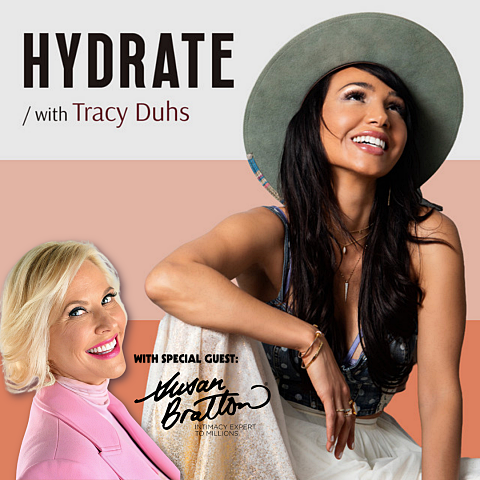
That is the perspective I shared during my guest appearance on the Hydrate Podcast with Tracy Duhs.
Tracy is a trusted advisor in the bioenergetic wellness space and describes herself as your “bioharmonizing bestie.” Her refreshing approach blends science with simplicity, giving people practical ways to improve their well-being without becoming overwhelmed by complicated biohacking protocols.
Our conversation explored one of my favorite subjects: how pleasurable intimacy supports health, vitality, connection, and longevity.
Sex Is the Fourth Pillar of Longevity
Most people recognize sleep, nutrition, and exercise as foundational pillars of health. I believe there is a fourth pillar that deserves the same attention: sex.
Your ability to experience pleasure throughout your lifetime is what I call your sex span.
Your sex span is not determined solely by your age, relationship history, hormones, or past experiences. It is something you can actively support and expand through education, communication, blood-flow optimization, regenerative therapies, and the continued development of your pleasure skills.
I know this from personal experience.
My own sex life did not truly take off until I was in my early 40s. Like so many women, I had absorbed cultural messages that misunderstood female pleasure and prioritized a male-centered sexual timeline. Once I began learning how arousal actually works, my intimate life transformed.
That discovery became the foundation of my life’s work.
The Male and Female Arousal Timeline Mismatch
One of the biggest challenges couples face is the difference between typical male and female arousal timelines.
The female erectile network extends far beyond the small portion of the clitoris that is externally visible. This interconnected system needs sufficient stimulation and blood flow to become fully engorged. For many women, reaching that state can take approximately 20 to 30 minutes.
Yet many couples begin penetration long before the woman’s body is fully aroused.
This does not mean anything is wrong with her. It means her body has not been given the time, attention, and stimulation it needs.
When couples understand this difference, they can stop interpreting it as rejection, incompatibility, or dysfunction. They can expand what they consider intimacy, slow down, and create experiences that allow both partners to become fully ready.
Orgasms Are Learned Skills
During our conversation, I also shared that the human body is capable of experiencing more than 20 different kinds of orgasms.
Pleasure is not limited to the genitals. Orgasmic experiences may be generated through stimulation of areas such as the nipples, lips, throat, feet, and other sensitive regions of the body.
This range is possible because orgasms are not simply a matter of luck. They are learned skills.
Like meditation, dancing, or playing an instrument, pleasure develops through attention, practice, relaxation, communication, and curiosity. The nervous system can learn new pathways and expand its capacity for sensation.
If you have struggled to experience orgasm—or have only experienced pleasure in one particular way—that does not mean you have reached your body’s limit. It may simply mean there are additional skills and sensations you have not yet had the opportunity to explore.
Nitric Oxide Blood Flow and Sexual Vitality
Sexual wellness is also closely connected to cardiovascular and neurological health.
Nitric oxide is a signaling molecule that helps blood vessels relax and supports healthy circulation. Our natural nitric oxide production tends to decline as we age, which can affect erectile response, sensitivity, pleasure, energy, and even aspects of cognitive performance.
This is one reason people may notice changes in sexual function during their 40s, 50s, and beyond.
Fortunately, there are many ways to support blood flow and tissue health. During the episode, Tracy and I discussed approaches that may include lifestyle changes, targeted supplementation, red-light therapy, acoustic-wave therapy, and other sexual-rejuvenation modalities.
These therapies should always be considered according to your individual health needs and, where appropriate, discussed with a qualified healthcare professional.
The STI Many Standard Panels May Miss
We also talked about Mycoplasma genitalium, sometimes called M. genitalium or Mgen.
This sexually transmitted infection is not always included in routine STI screening panels. That means someone can request “a full panel” and still not necessarily be tested for it.
Mgen may cause symptoms such as discomfort, burning, unusual discharge, pelvic pain, or inflammation, but some people experience no obvious symptoms at all. Anyone with persistent symptoms, a known exposure, or concerns about sexual health should ask a knowledgeable medical provider which specific infections are included in their testing.
Never assume that the phrase “full STI panel” automatically covers every possible infection.
Weight Loss Medications and Intimate Tissue Health
We also addressed reports of intimate changes experienced by some women while using GLP-1 weight-loss medications.
Rapid weight loss, hormonal changes, nutritional status, reduced muscle mass, and changes in fatty tissue can all affect how the body looks and feels—including the vulvar and vaginal tissues. More research is needed to understand the direct and indirect roles these medications may play.
This is not a reason to abandon a medically beneficial treatment. It is a reason to pay attention to your whole body and discuss new symptoms with your prescribing clinician.
Sexual health should be part of the conversation whenever we evaluate a therapy’s effects on quality of life.
Your Best Sex Can Still Be Ahead of You
One of the most important messages I want you to take from this episode is that your past does not dictate your intimate future.
It does not matter whether you received poor sex education, spent years prioritizing someone else’s pleasure, experienced changes after childbirth or menopause, lost sensitivity, developed performance anxiety, or simply never learned what your body truly enjoys.
Pleasure can be learned. Communication can improve. Blood flow and tissue health can be supported. Couples can replace pressure with curiosity and create new experiences together.
Aging does not have to mean surrendering your sexuality.
In fact, when you combine greater self-knowledge with better communication and modern wellness tools, your later years can become the most connected and satisfying chapter of your intimate life.
My best sex began in midlife—and yours may still be waiting for you.
Listen to my full conversation with Tracy Duhs on the Hydrate Podcast to discover why sex belongs beside sleep, nutrition, and exercise as a pillar of longevity.
After hearing this conversation, you may never look at intimacy—or your body’s potential—the same way again.
Youtube⇓
Spotify⇓
Apple Podcast⇓